A granite village clinging to its hill, a citadel plunging into a turquoise sea, a mountain pass where the Aiguilles de Bavella pierce the clouds… That is what Southern Corsica looks like, seen from the road. But with so many treasures scattered across such a contrasting territory, one question keeps coming back among travelers: where to start, and how to organize everything without spending hours on it?
That is exactly the role of a good map: turning this abundance of information into a clear route, village by village, region by region. In this guide, I take you to discover the most striking villages in the south of the island, with a concrete itinerary to follow, from the Bay of Ajaccio to the mountains of Alta Rocca.
Why good preparation changes everything when discovering these villages in southern Corsica
Between dream beaches, mountain trails, and characterful villages, this region offers such a choice that it is easy to get lost before even setting foot on the island. Many travelers arrive with a long list of names, Sartène, Bonifacio, Zonza, Levie, without knowing how to connect them or how much time to plan on the road.
Result: improvised days, kilometers driven twice due to a lack of geographical logic, and sometimes a village discovered on the way back, but in another traveler’s photo, which you obviously regret not having visited. The inland relief, with its winding roads and sometimes unreliable mobile network in the Alta Rocca, makes good preparation all the more useful.
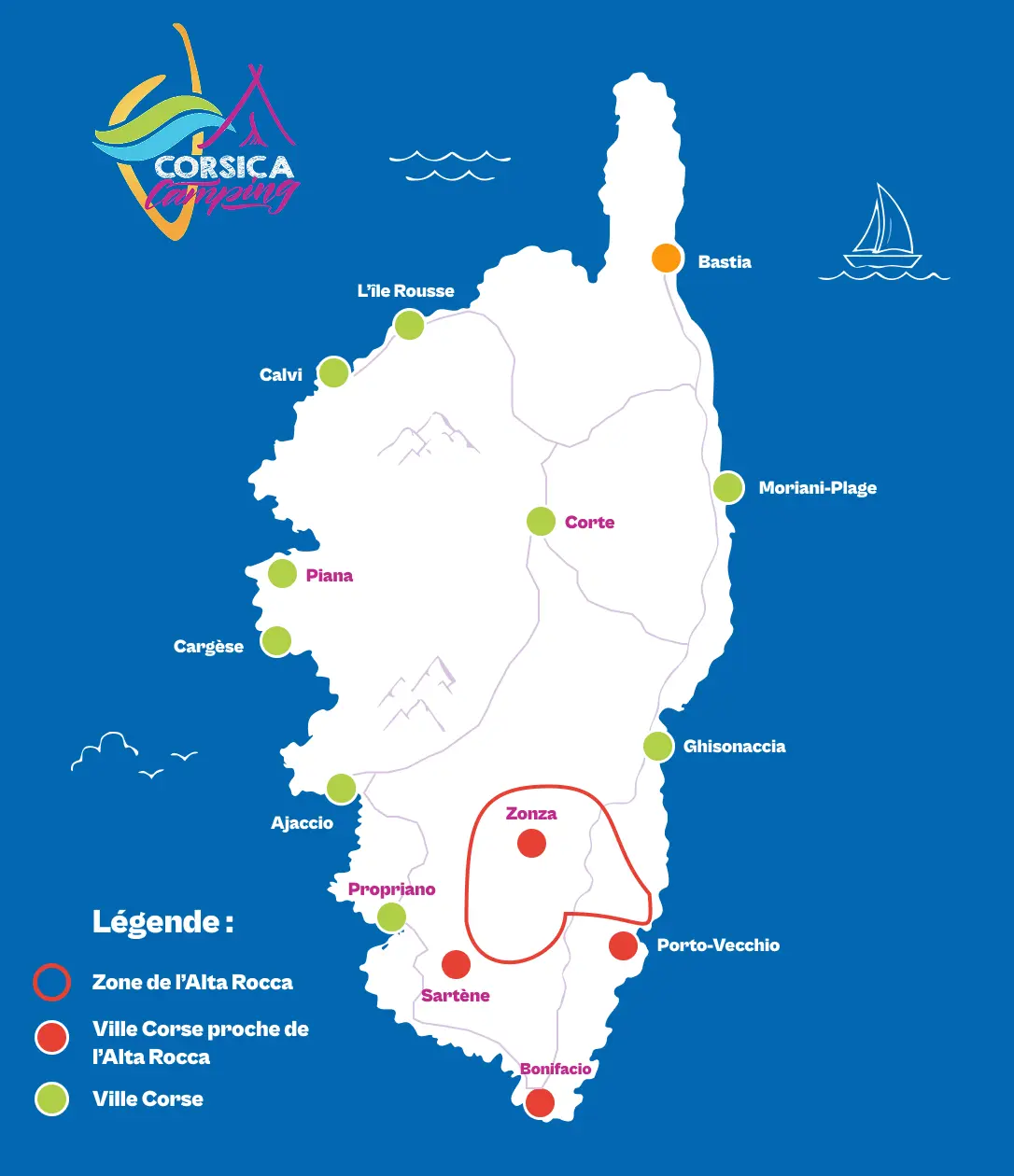
That is where a good overview becomes valuable. It allows you to see at a glance the main areas of the territory, the coastline, the Alta Rocca, the Sartenais-Valinco, and to build a coherent itinerary rather than a succession of detours.
This contrast is obvious from the first kilometers: the turquoise waters of Palombaggia or Santa Giulia stretch just a few kilometers from the rugged reliefs of the Alta Rocca. You can go from swimming in crystal-clear water to a mountain hike in the same day, which is quite rare in such a compact territory.
The must-see typical villages of Southern Corsica
If only a few stops were to be kept, this trio would come up almost every time: Sartène for its mineral authenticity, Bonifacio for the spectacle of the cliffs, and Zonza as the gateway to the perched villages of the Alta Rocca.
Sartène, the granite city that embodies the Corsican soul
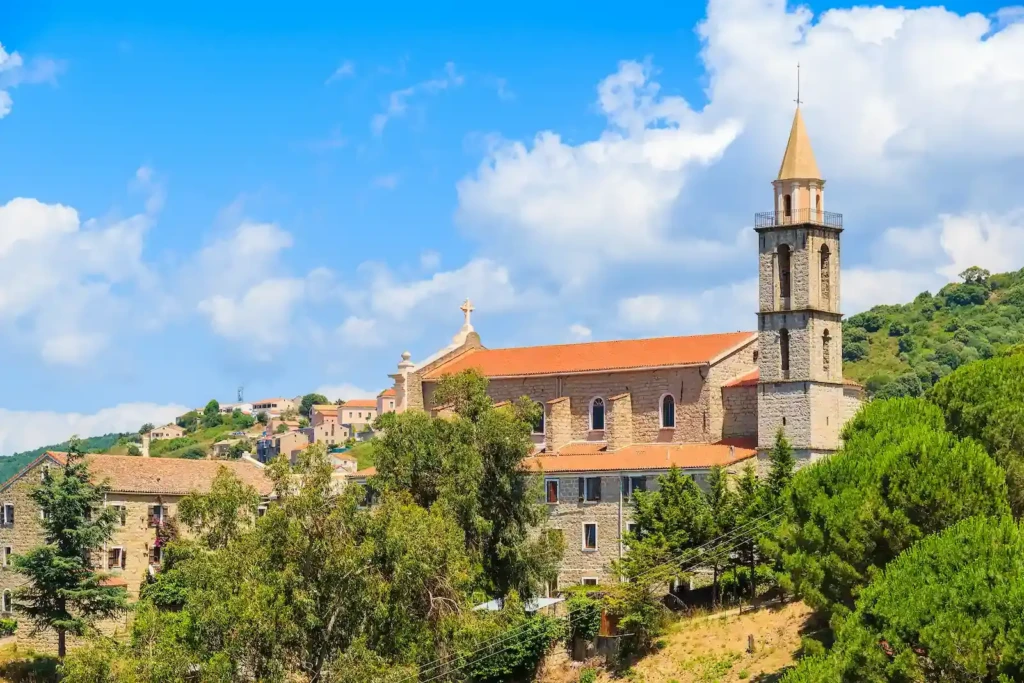
Perched on its rocky spur above the Rizzanese valley, Sartène is often the first stop on an itinerary toward the south of the island. Its cobbled alleys, tall gray granite houses, and vaulted passages give the impression of crossing several centuries in just a few steps.
The writer Prosper Mérimée, passing through Corsica in the 19th century, summed up the character of the place as follows: “the most Corsican of Corsican towns.” A phrase that has remained associated with this village ever since, where traditions, such as the Catenacciu procession on the evening of Good Friday, are still alive today.
Bonifacio, the citadel suspended between sea and cliffs
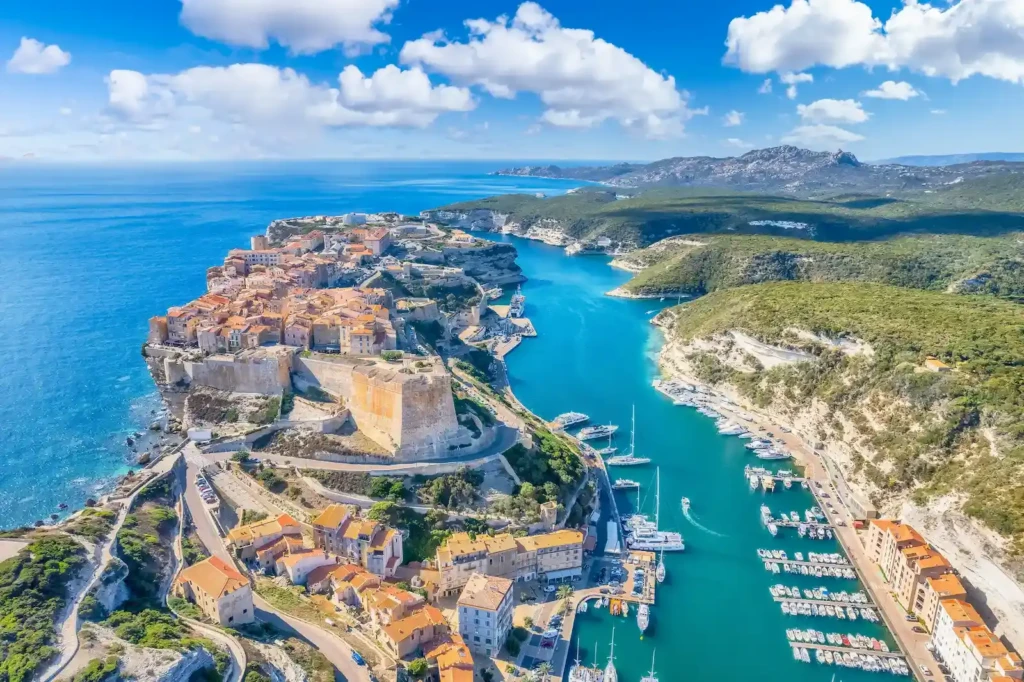
It’s impossible to mention a stay in the south of the island without stopping at Bonifacio. The citadel, built directly into the limestone rock, towers several dozen meters above the sea, offering dizzying views over the Lavezzi Islands and, on clear days, over Sardinia.
From the old town, the narrow streets lead to the Bastion de l’Étendard and then to the marine cemetery, before winding back down to the port. Allow a good half-day to enjoy both the citadel and a boat trip to the sea caves, weather permitting.
Zonza and the perched villages of Alta Rocca
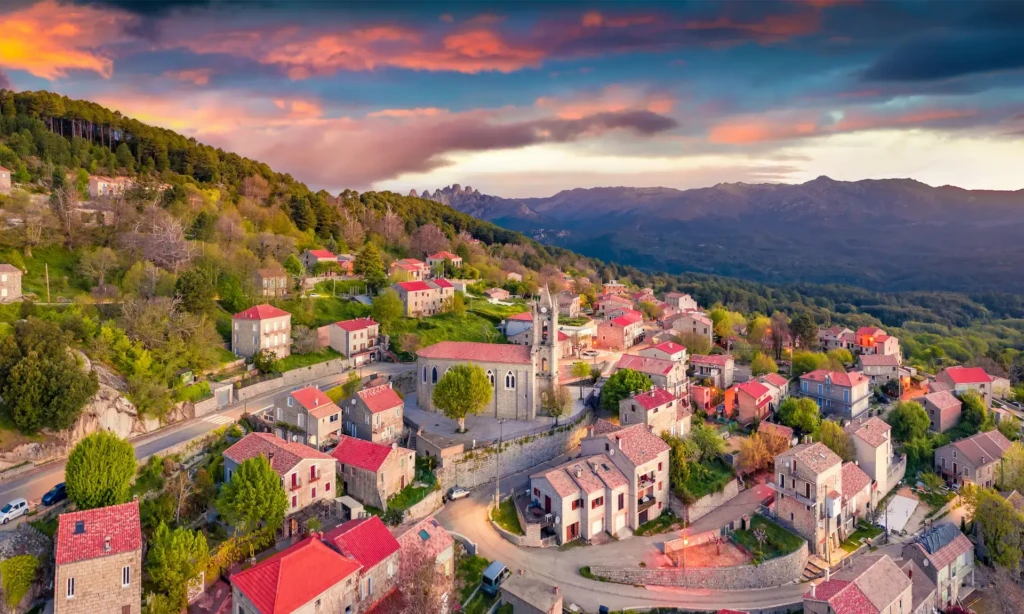
Heading inland, the road climbs up to Zonza, at the foot of the Aiguilles de Bavella. This mountain village, built on granite blocks at an altitude of around 900 meters, serves as a crossroads to the sixteen perched villages of Alta Rocca: Levie with its archaeological museum, Quenza with its hikes on the Cuscionu plateau, or Sainte-Lucie-de-Tallano with its curious orbicular stone.
Here, the pace changes: you leave the beaches behind for another side of the island, made of laricio pine forests, sheepfolds, and silence. A good number of these villages are best explored on foot or by bike, using the trails that connect the hamlets to each other.
Another good reason to linger in these inland villages: the food. Artisanal cured meats, mountain-aged ewe’s milk cheeses, chestnut grove honey… the gastronomy of Alta Rocca faithfully reflects this mid-mountain terroir, and many villages host local markets or fairs throughout the seasons — a chance to leave with some local products rather than just a souvenir.
Suggested itinerary, map in hand: from Ajaccio to the villages of Alta Rocca
To connect these villages without wasting time on the road, here is a simple itinerary to follow, whether you have three days or a week ahead of you. It follows the logic of a southern Corsica villages route map, designed from the coast inland:
- Ajaccio: the logical starting point for most visitors, with its airport, car rental options, and first beaches.
- Sartène (about 1h20 drive): first immersion in a typical southern Corsican village, best visited late morning to enjoy the light on the granite.
- Bonifacio (about 50 minutes from Sartène): citadel and cliffs, to plan for a half-day or even an overnight stay.
- Zonza and Alta Rocca (about 50 minutes from Bonifacio, via a mountain road): perched villages, hikes, and a welcome coolness after the coastal heat.
If you have more time, this itinerary easily fits into a larger program. We detail exactly how to visit southern Corsica in a week in a dedicated guide, and for driving enthusiasts, our southern Corsica road trip in 5 days covers a large part of this route with additional stops.
Paper or digital: which format to choose for exploring these villages
Once the route is set, the next step is choosing the right format. Paper still holds a real advantage in this area: it depends neither on a battery nor on a network, which matters in the remote zones of Alta Rocca or on certain coastal tracks. An overview on paper also helps visualize real distances, often misleading on small mountain roads.
Digital apps, for their part, offer real-time flexibility: zooming in on a hamlet, searching for an alternative route, recent reviews on a parking area or a trail. Many travelers combine both: a paper format for the overview before departure, an app to adjust once on site.
Practical tips before hitting the roads of the island’s south
A few practical pointers to enjoy these villages without any unpleasant surprises:
- Best time to visit: spring (April-June) and the late season (September-October) offer soft light and villages less crowded than in the height of summer.
- Mountain roads: the stretches toward Alta Rocca are winding and sometimes narrow; it’s better to allow more time than navigation apps suggest.
- Mobile network: in some perched villages, the connection remains patchy—a map downloaded in advance or printed out is a useful safety net.
- Parking: in villages like Sartène or Bonifacio, it’s best to park in the lots at the town entrance rather than venturing by car into narrow, often impassable alleys.
- Respect for the places: alleys, ramparts, and granite houses are part of the living heritage of these villages; keep in mind they are primarily inhabited year-round.
FAQ: going on a motorhome trip in Southern Corsica
Ready to follow this route on the roads of Southern Corsica?
A route designed from the coast to the mountains, and these few typical villages are enough to turn a stay on the island into a real thread, rather than a series of improvised detours. Sartène for authenticity, Bonifacio for the vertigo, Zonza and Alta Rocca for rediscovered silence: it’s up to you to chart your own path.